

40% of Americans believe Medicare will pay for LTC

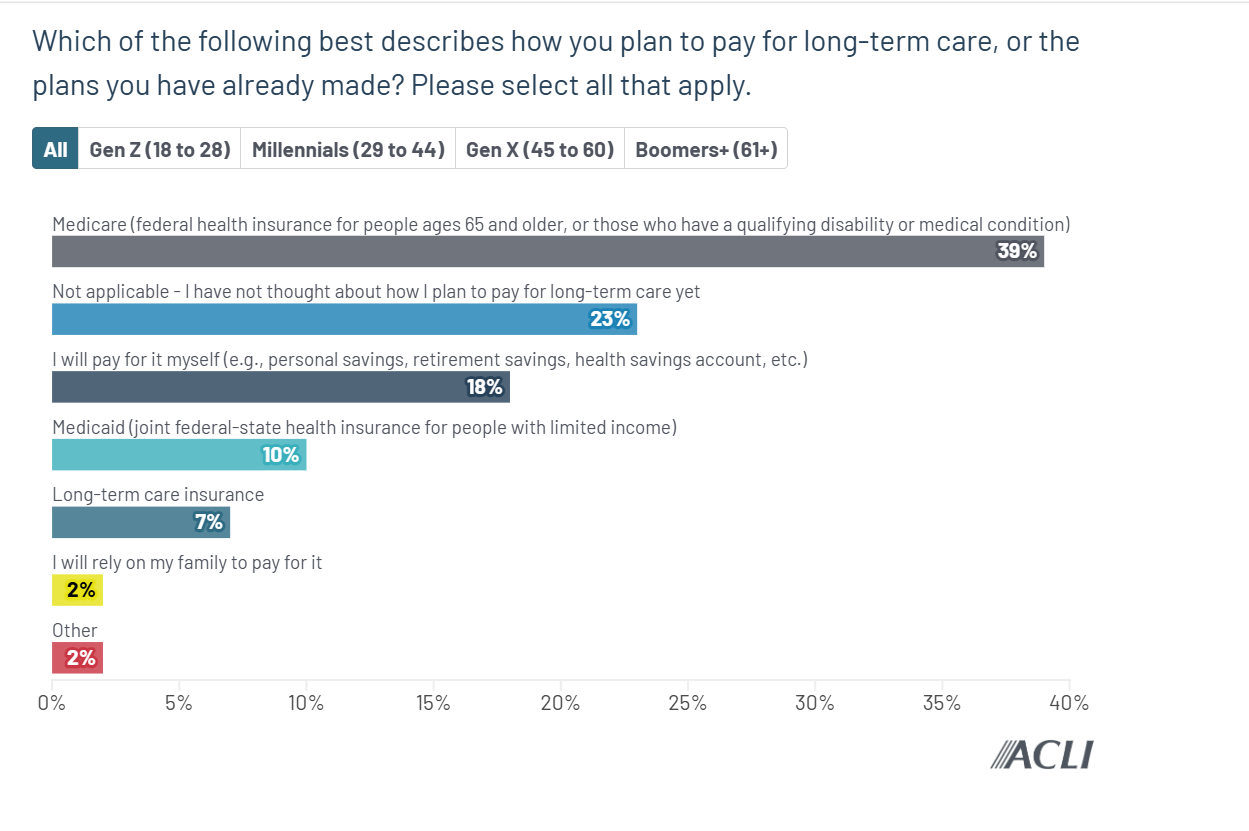
Nearly 40% of middle-class Americans said they plan to use Medicare to cover their future long-term care expenses – even though Medicare doesn’t cover LTC. In addition, nearly a quarter of Americans haven’t even considered how they will pay for LTC, meaning that more than 60% of Americans are financially unprepared for health challenges as they age.
Those were among the highlights of the American Council of Life Insurers’ latest Financial Resilience Index.
The cost of future care – and how consumers will pay for it – is a subject that the life insurance industry must address in two ways, David Chavern, ACLI president and CEO, told InsuranceNewsNet.
“One, we have to talk about it,” he said. “Two, the life insurance industry is interesting in that we sell products to help people deal with the scariest things in their life, savings products for retirement and long-term care, and we must do a better job of explaining what long-term care products are out there, and all the benefits they have.”
The survey also found that middle-class households are most concerned about affording daily essentials (46%), healthcare services (40%) and transportation (36%) over the next year. Concerns about the affordability of transportation costs rose substantially over the past year (from 26% to 36%).

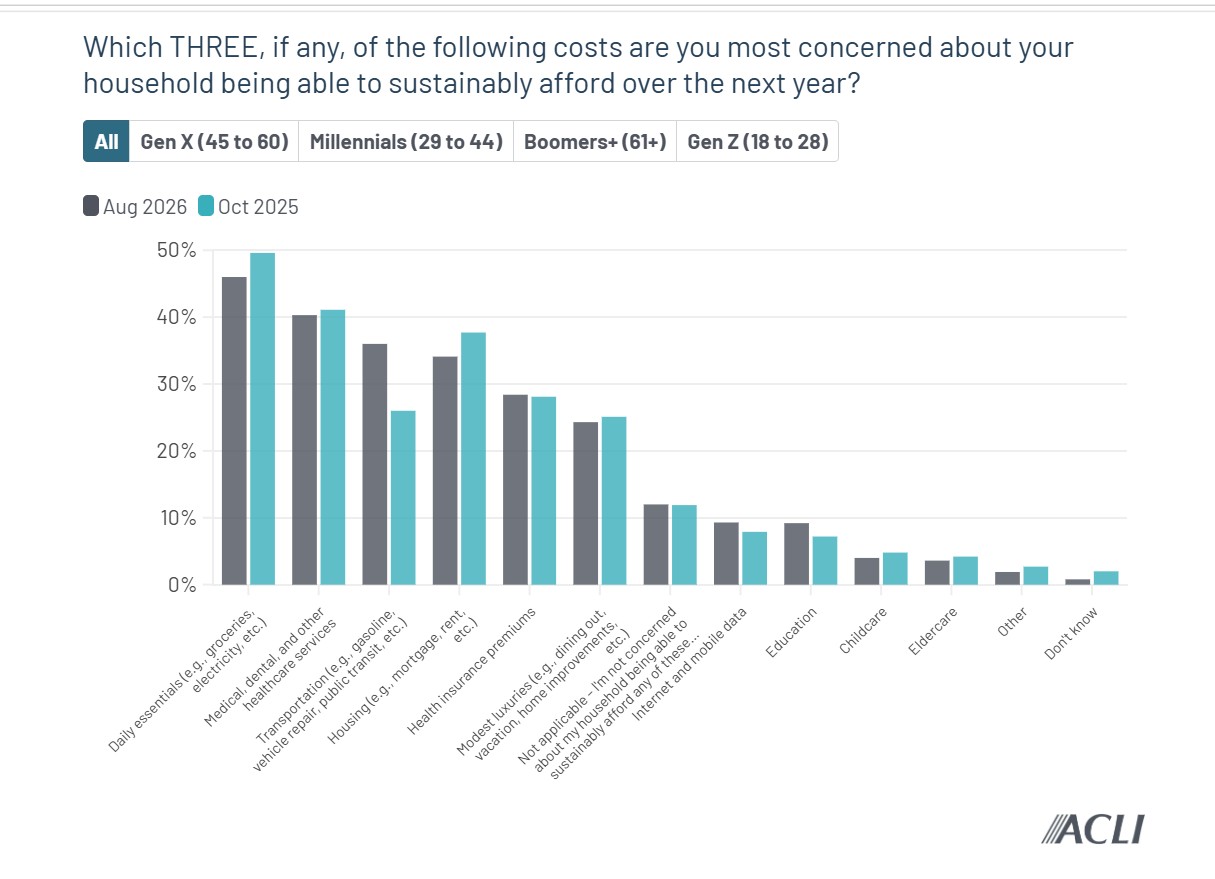
Concerns around the affordability of healthcare increase significantly with age, but the biggest gap is between Generation Z and millennial households: slightly more than a quarter of Gen Z is concerned about healthcare costs, compared to nearly two-fifths of millennials.
Consumers feel ‘unease’
Chavern said the survey results showed that while many consumers see the stock market climbing, “there’s an unease that’s seeped in, where they’re not particularly optimistic about the near term. People are glad the markets are up, but they don’t think that’s the whole story.”
The industry can play a part in helping alleviate consumers’ financial fears “by letting them know we have a suite of tools to help them manage risk,” he said.
“I think people can feel helpless. But there are tools that can give you a solid base. We’re not solving all the problems but we have tools, and once you know about those tools, you can approach things with less anxiety. I think what the industry must do is meet people where they are and help them work through their anxieties and show them that a lot of solutions are possible.”
ACLI’s Financial Resilience Index, which is released quarterly, measures the ability of the middle class to manage life’s challenges and plan for a stable future. The index tracks 26 variables that represent typical cost pressures for middle-class households (like housing, gas and childcare) through the Cost Resilience Index and the financial resources that are available to meet them (like income, access to credit and retirement assets) through the Resource Resilience Index. By tracking the direction and magnitude of cost pressures and resources, the index reflects how middle-class financial resilience changes over time, and what is driving improvement or decline.
These concerns are reflected in the Q2 Index, which fell 10 points between Q1 and Q2 2026. While the Headline Index remains at a modestly positive score of +10, indicating that middle-class financial resilience is still reasonably strong relative to historical norms, the pace of improvement is slowing.
The downward movement in the Headline Index in the second quarter reflects another emerging financial challenge for middle-class households: slowing wage growth and persistent inflation. Inflation has outpaced wage growth since April, and this wage-price dynamic is a key reason for the decline in Headline Index in Q2.
© Entire contents copyright 2026 by InsuranceNewsNet.com Inc. All rights reserved. No part of this article may be reprinted without the expressed written consent from InsuranceNewsNet.com.
The post 40% of Americans believe Medicare will pay for LTC appeared first on Insurance News | InsuranceNewsNet.