
Fed defies Trump with first interest rate hike in three years
The Federal Reserve raised interest rates Wednesday by 25 basis points as persistent inflation, higher energy prices and market turbulence complicate the central bank’s efforts to bring price growth back to its 2% target.
The Fed maintained benchmark interest rates in the 3.5% to 3.75% range for three years as it tried to tame inflation to a 2% annual rate. The board of governors voted to raise rates to 3.75% to 4%.
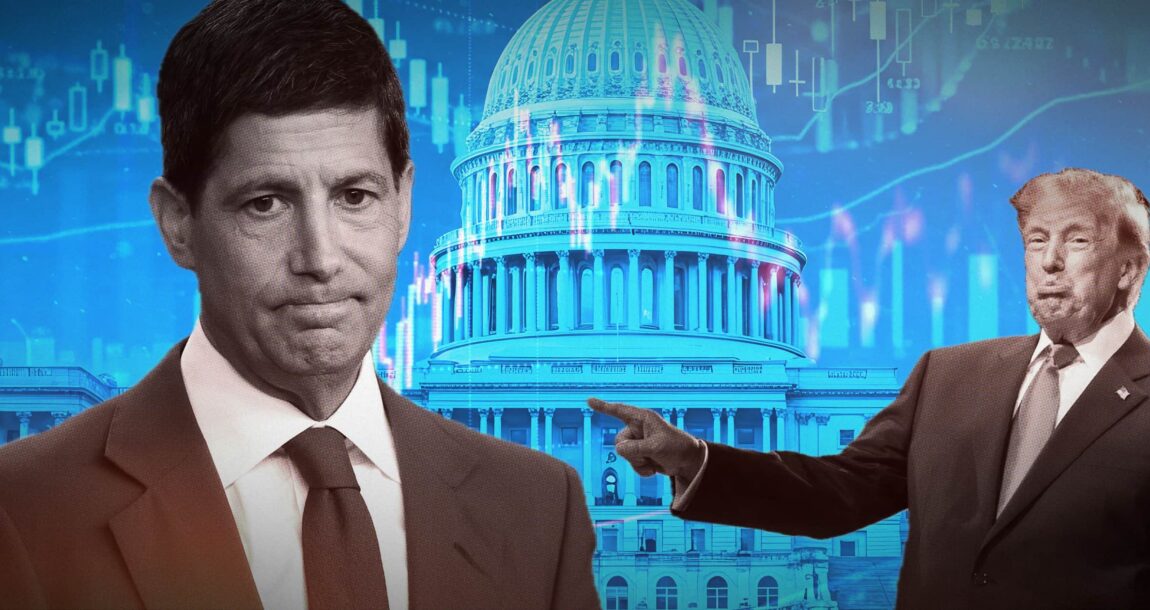
The increase marks the first rate adjustment under Fed Chair Kevin Warsh and runs counter to President Donald Trump’s repeated calls for lower borrowing costs.
“Our decision comes at a time when the American economy appears to be strengthening,” Warsh said in prepared remarks following the decision. He added that inflation is the main focus for the Fed. “Our predominant focus is on the price stability side of our mandate.”
It might not be the last rate hike this year.
Sixteen of 19 board members said they see another rate hike this year, the Fed said.

Inflation held at 3.4% in August, matching July and remaining above the Fed’s target, according to the Consumer Price Index. Inflation has remained above the target since 2021. The Fed’s preferred gauge, the personal consumption expenditures index, has followed a similar pattern, staying above 2% since early 2021.
“The Fed has ripped off the Band-Aid, but this does not look like a one-dose cure,” said Olu Sonola, head of U.S. economics for Fitch Ratings. “Its projections point to a longer course of treatment, and a robust economy likely gives the Fed the runway to continue raising rates.
“This unanimous decision should maintain the Fed’s inflation-fighting credibility against a politically sensitive backdrop, but the economy’s ability to withstand higher rates should not be confused with consumers’ ability to absorb them. Aggregate resilience will mask a widening divide between consumers insulated from higher rates and those being squeezed by increasingly expensive credit.”
Economic forecast raised
The Fed slightly raised its U.S. economic growth forecast for 2026 to 2.3% (up from 2.2%). Growth is projected to remain steady at 2.4% in 2027 and 2.2% in 2028.
Retirement savers are suffering from “investment inflation,” said Yuri Nosenko, wealth advisor with Imperial Fund Asset Management, or “how quickly the cost of building and maintaining wealth is increasing.” This number of closer to 6% over the long term, he said.
“If your cash is earning 3% or 4%, you may be keeping pace with the grocery store, but you’re falling behind on wealth accumulation,” Nosenko added.
Industry trade groups put a positive spin on a rate hike that few saw coming even a few months ago, as Finseca CEO Marc Cadin noted.
“For our members and the families they serve, this is exactly the moment when having a financial plan — and a trusted advisor to help interpret what a change like this means for your specific goals — matters most,” Cadin said. “Rate changes affect everything from annuity crediting rates to retirement income strategy, and our members are there to help clients make sense of it and adjust with confidence.”
Another quick shift change
The rate increase marks another abrupt shift for an economy and financial markets already facing heightened volatility. As recently as March, the Federal Reserve had projected one rate cut this year. But renewed fighting involving Iran and resulting spikes in oil and gas prices threaten to keep inflation above the Fed’s 2% target for longer.
“I don’t see any end to the war in Iran right now,” Kristin Forbes, an economist at MIT’s Sloan School, told The Associated Press. “Given what everyone has been through in the last few years of high inflation, consumers are more sensitive, companies are more sensitive, they raise prices faster … The risks are much more on more persistent inflation than it falling quickly.”
Heavy investment in artificial intelligence data centers has added to inflationary pressures and helped push longer-term interest rates higher. Some of the industry’s biggest companies, however, are now discussing whether to slow the pace of AI development.
The Fed’s decision also comes just seven weeks before the midterm elections, with high prices and affordability expected to remain central issues for voters. President Donald Trump has repeatedly called for lower interest rates. On Sunday, Trump argued that the strength of the U.S. economy means the country “should be paying the lowest interest rate in the world.”
Pressure from Trump
The rate decision provided an early test of the Fed’s independence under Warsh, whom Trump nominated.
When Warsh took over, markets had questioned whether he would face pressure from the White House to reduce interest rates. Instead, persistent inflation and higher energy prices tied to the conflict in the Middle East have complicated the case for immediate rate cuts.
At Warsh’s May swearing-in ceremony, Trump praised the new Fed chair and encouraged him to remain “totally independent.” The comments followed months of criticism of former Fed Chair Jerome Powell, whom Trump repeatedly pressed to cut interest rates.
Trump has continued to call for lower rates. More recently, he has threatened to escalate the trade war if interest rates do not fall. Asked whether the Fed would raise rates in September, Trump responded, “I don’t know.”
Kevin Hassett, director of the National Economic Council, said Friday on Bloomberg TV that Trump still wants the Fed to cut rates. If that does not happen, Hassett said, “the president will have something to say about it.”
The combination of stubborn inflation, shifting market expectations and pressure from the White House leaves Warsh facing heightened scrutiny as the Fed weighs its next move.
The Associated Press contributed to this report
© Entire contents copyright 2026 by InsuranceNewsNet.com Inc. All rights reserved. No part of this article may be reprinted without the expressed written consent from InsuranceNewsNet.com.
The post Fed defies Trump with first interest rate hike in three years appeared first on Insurance News | InsuranceNewsNet.