

Life insurance sales surge 7% in 2025, but the work Isn’t over

Since the 2020 pandemic, life insurance sales have surged. In 2025, policy counts jumped 7% year over year, but there remains work to be done, LIMRA researchers say.
“Despite these record sales, we haven’t seen a meaningful decline in the life insurance needs gap,” Bryan Hodgens, head of LIMRA research, said during a recent LinkedIn Live titled, “Understanding the Elusive Life Insurance Consumer.”
Hodgens was joined by Steve Wood, research director for LIMRA’s Markets Research, to discuss results from the 2026 Insurance Barometer Study, conducted jointly by nonprofit industry trade associations LIMRA and Life Happens.
“When the pandemic hit in 2020, we saw a fairly significant rise in the people who said they don’t have life insurance and need to buy some or they have some and need more,” Wood said.
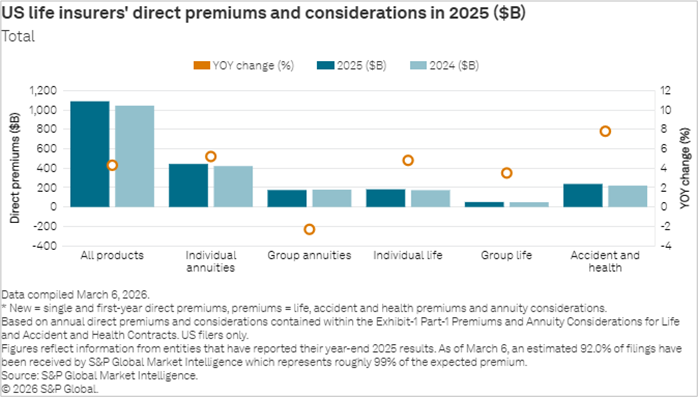
Wood said the pandemic led to a rise in awareness of the need for life insurance, as there was a lot of premature mortality. Despite better health outcomes and vaccines, that awareness stayed elevated for five or six years, but it started dropping last year.

Since LIMRA, along with some of its member companies, has been in business for over 100 years, researchers were able to look back to 1918 and compare the rise in interest in life insurance following the influenza pandemic in that year.
“It matches almost perfectly what we saw from the 2020 pandemic. It’s about a four-year tail in interest in life insurance following a global pandemic,” Wood said.
During the LinkedIn Live, they discussed the many factors impacting life insurance sales, including demographics, technology advances, changes in distribution and overestimating the cost.
“By 2030, there will be more people over 65 than under 30,” Hodgens said, noting that the advisor population is also aging.
At the same time, Wood notes that younger generations are delaying or rejecting entirely life events like marriage or starting a family. “We know that’s a huge driver in first-time life insurance purchasing,” Wood said.
‘Personal connections’ are key
Additionally, the industry is using artificial intelligence and other new technologies to streamline the digital process, underwriting, and the speed to market.
“All of these technological advancements are helping more people understand life insurance in a simpler, faster way,” Wood said. “That is allowing our human agents to make those personal connections, which ultimately is what drives sales of more life insurance.”
This is important because the 2026 Insurance Barometer study revealed that 40% of Americans have little or no understanding of life insurance.
“People don’t buy what they don’t understand,” Wood noted. “So how do we get them to understand what life insurance is, how it works and how it’s really different from health insurance or property and casualty insurance?”
Another potential barrier to some people getting life insurance may be a misunderstanding of the cost of life insurance.
In the most-recent Barometer study, instead of just asking them about one particular policy, the study asked respondents about themselves and how much a very basic $250,000 level term, 20-year policy would be for them.
They were asked to rate their health on a scale of one to 10, and then LIMRA developed a matrix pricing for that person.
“What we find probably isn’t surprising, but essentially the younger and healthier a person is, the more they overestimate – often by as much as 10 times the actual cost – what that policy would be for them,” Wood said.
Wood said that younger people think life insurance is as much as $1,200 a year when, in fact, the younger and healthy you are, the cheaper it is to buy life insurance.
Entire contents copyright 2026 by InsuranceNewsNet.com Inc. All rights reserved. No part of this article may be reprinted without the expressed written consent from InsuranceNewsNet.com.
The post Life insurance sales surge 7% in 2025, but the work Isn’t over appeared first on Insurance News | InsuranceNewsNet.