
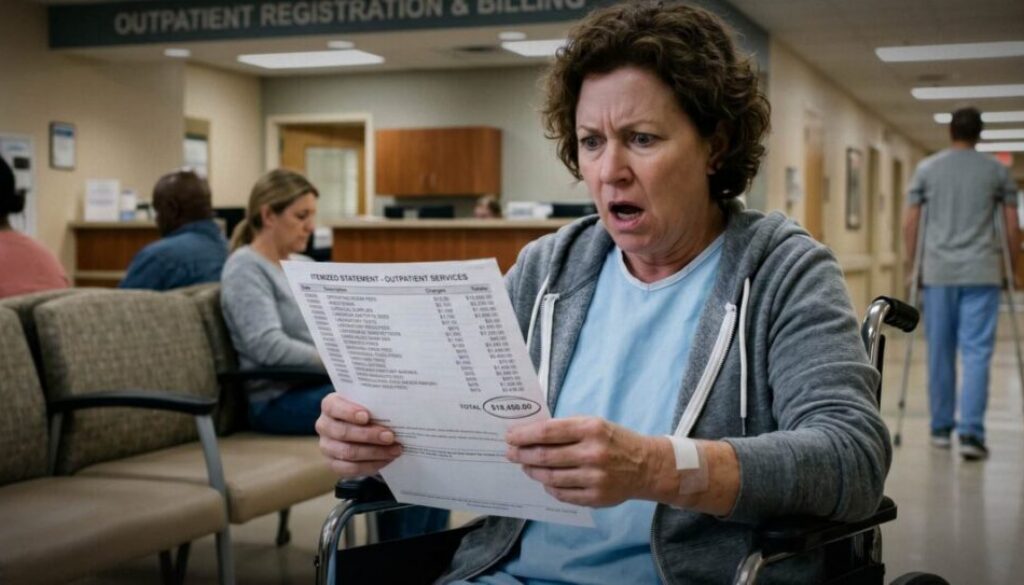
How hospital outpatient departments increase the cost of care

Two shifts in care are bringing more people to hospital outpatient departments, and these hospital departments are more expensive than independent physician offices for the same service.
That was part of a report from Christine Monahan, assistant research professor at Georgetown University, who presented her findings to the National Association of Insurance Commissioners Health Care Affordability and Mitigation (B) Working Group.
While hospital inpatient usage has increased since 2000, hospital outpatient usage went up by 31% between 2000 and 2023, she said. At the same time, the percentage of U.S. physicians employed by hospitals and health systems rose from nearly 47% in 2019 to more than 55% in 2024.
“Split billing,” or “provider-based billing,” at hospital outpatient departments means separate charges from the hospital and the physician, resulting in higher total spending, she said. Average spending on primary care office visits is $116 for a physician’s office but increases to $217 for a visit to a hospital outpatient department, with $114 of that going to the facility component of the bill.
Split billing happens in both the Medicare and the commercial markets, Monahan said, but price differences between hospital outpatient departments and independent physician offices vary more significantly and are much higher overall in the commercial market due to market forces.
The consequences of increased use of hospital outpatient departments include more vertical integration, higher total spending, greater consumer out-of-pocket exposure, consumer surprises and potential access problems, the report said.

Monahan said states have enacted a variety of reforms in the commercial market, including:
- Facility fee billing bans
- Patient billing protections
- Billing transparency
- Public reporting requirements
- Consumer notification requirements
The report made the following recommendations:
- Examine horizontal or vertical integration in health care, including using medical loss ratio data. Study facility fee billing and site of services diffentials, their relationship with vertical integration, and the role reform can play in limiting or mitigating consumer harm from vertical integration.
- Adopt reference-based pricing. Consider commercial site-neutral payment reform proposals, which may use Medicare or other public fee schedules as a benchmark.
- Enhance price transparency. Examine billing transparency laws, public reporting requirements and consumer disclosure rules for outpatient facility fees across the states.
Group will look at state options to reduce costs
The working group will draft a series of briefs on state options for reducing health insurance costs. The briefs will cover the following options:
- Standardize or limit utilization review to reduce administrative costs.
- Examine horizontal or vertical integration in health care, including using medical loss ratio data.
- Develop state-defined plans with premium reduction targets.
- Adopt reference-based pricing.
- Enhance price transparency.
- Assess direct-to-consumer drug platforms’ interaction with insurance and affordability impacts.
The working group will have outlines of each of these drafts by the end of June.
© Entire contents copyright 2026 by InsuranceNewsNet.com Inc. All rights reserved. No part of this article may be reprinted without the expressed written consent from InsuranceNewsNet.com.
The post How hospital outpatient departments increase the cost of care appeared first on Insurance News | InsuranceNewsNet.