Home insurance is in crisis: Could a federal solution be the answer?
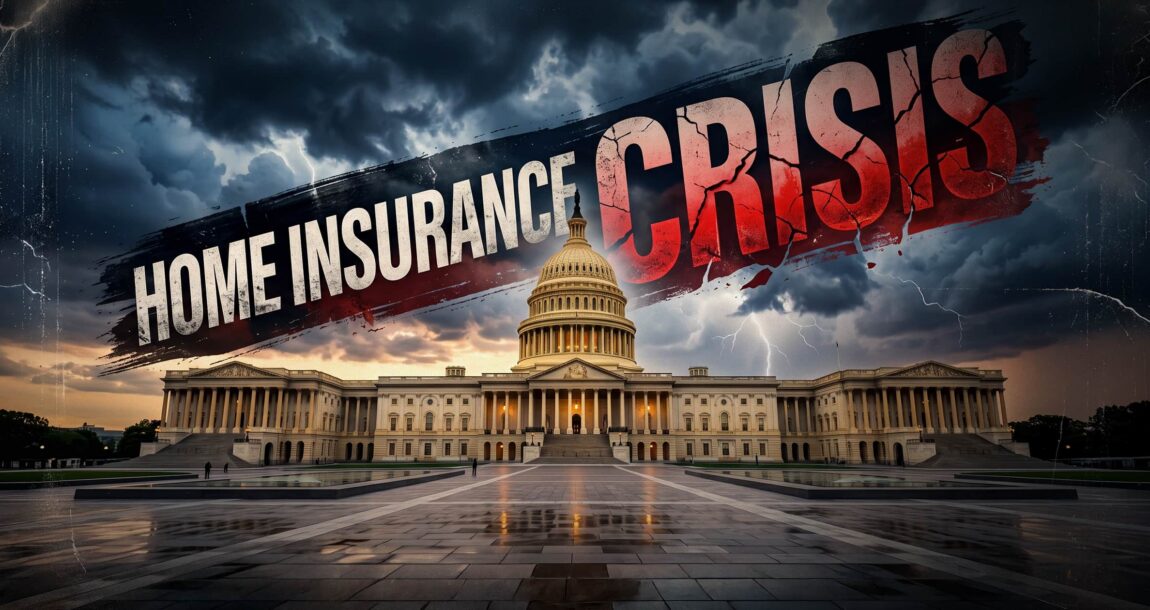
Home insurance premiums have risen dramatically across the country, with homeowners in disaster-prone areas facing the steepest increases.
“A myth I see repeated regularly is the idea that some people deserve to pay more for insurance because they chose to live in a risky place,” said Moira Birss, senior fellow at the Climate and Community Institute.
According to Birss, this point of view is problematic for a number of reasons. First, climate risk is rising everywhere. If it’s not wildfires or hurricanes in your area, it could be hail, floods, or landslides.
Second, your ability to choose where you live is often constrained by things like where your job or family is located, or where you can afford the rent or mortgage.
You may also have moved somewhere long before disasters were as frequent as they are today, and are now stuck.
“The only ones who truly get to choose where they live are the rich,” Birss explained.

That’s why the Climate and Community Institute proposes a federal solution to the home insurance crisis: a collective protection system in which risk is shared and Americans recognize that disasters affect us all, especially as climate change worsens.
Unless policymakers prioritize making housing safer and helping us pool our shared exposure to disaster risks, rather than trying to rescue insurance companies, the crisis will continue, the institute said.
Critics say trillion-dollar losses possible
The institute is promoting a holistic approach through a proposed National Housing Resilience Agency (NHRA). The agency would aim to reduce disaster risk by moving away from fossil fuels to limit further climate change while also investing in measures to make homes more resilient, the institute said.
It would also help spread out the costs of disasters so that all U.S. homeowners have adequate financial protection when they need it because the reality is, everyone faces disaster risk, no matter where they live, the institute said.
The controversial proposal would establish a single-payer national disaster insurance and risk mitigation. Critics, insurance industry stakeholders, and fiscal analysts raise significant concerns regarding this model.
Critics argue that replacing private property/disaster insurance markets with a federal single-payer backstop puts taxpayers on the hook for trillion-dollar climate-related losses. Skeptics question the feasibility of initial capitalization, noting that forcing levies or retroactive fees on private lenders and insurers could disrupt the broader housing finance market.
Don Griffin, senior department vice president with the American Property Casualty Insurance Association, shared this statement on the institute’s proposal:
“APCIA supports policies that make communities safer, more resilient, and insurance coverage more affordable. The most effective path forward is not replacing the private market with a government-run system, but reducing risk through stronger mitigation, resilient infrastructure, modern building codes, and policies that support competitive insurance markets and consumer choice.”
‘Address the root causes’
Birss said bolder action is needed.
“Advisors and homeowners must vote and advocate for policies that address the root causes of the insurance crisis: climate change, corporate profiteering, and an individualistic approach to large-scale disasters,” Birss said.
Everyone needs to understand that if those policy shifts don’t happen, she said, insurance will continue to become more inadequate, unaffordable, and unavailable.
One significant barrier for many property owners nationwide is the limited options for insurance coverage.
Of course, homeowners can reduce coverage or increase deductibles, but that leaves them exposed to major financial losses in the case of a big disaster.
“In some places they might have access to so-called ‘surplus line’ coverage, but these policies are less regulated and therefore provide less protection from price gouging or company bankruptcy,” Birss noted.
Also, while homeowners in many states can turn to their state’s insurance-of-last-resort program, often known as the FAIR Plan, these programs tend to only offer bare bones coverage at high rates.
How the proposal would work
Today’s insurance industry is built on the assumption that risk is relatively predictable and stable so that insurers can easily predict claims payout costs.
However, when risk becomes less predictable and climbs over time, private insurance companies charge higher premiums, drop policyholders, and cherry-pick the lowest risk customers.
“This enables insurers to keep their balance sheets healthy, but leaves households unprotected and public coffers to cover uninsured costs,” Birss explained.
Most policy approaches today seek to rescue the industry from this situation through deregulation that allows insurance companies to charge higher premiums faster.
However, this doesn’t solve the insurance crisis and in many cases, it exacerbates it.
“The policy priority should be making our homes safer and protecting our household finances when disaster strikes,” Birss said.
‘Would be greatly improved’
“If we imagine it’s 2036 and we’ve had a National Housing Resilience Authority for the last five years, the country’s insurance availability and affordability situation would be greatly improved,” Birss explained.
Across the U.S., households will have had help hardening their homes and communities against the various disasters they may face, be it wildfires, hurricanes, hailstorms, landslides, earthquakes, or floods.
“Disasters may still cause damage, though, and the NHRA will provide financial protection so that households can recover rather than be bankrupted or even forced onto the streets,” Birss added.
Lastly, there would be more affordable housing options located in less risky areas and built to stronger resilience standards.
© Entire contents copyright 2026 by InsuranceNewsNet.com Inc. All rights reserved. No part of this article may be reprinted without the expressed written consent from InsuranceNewsNet.com.
The post Home insurance is in crisis: Could a federal solution be the answer? appeared first on Insurance News | InsuranceNewsNet.