
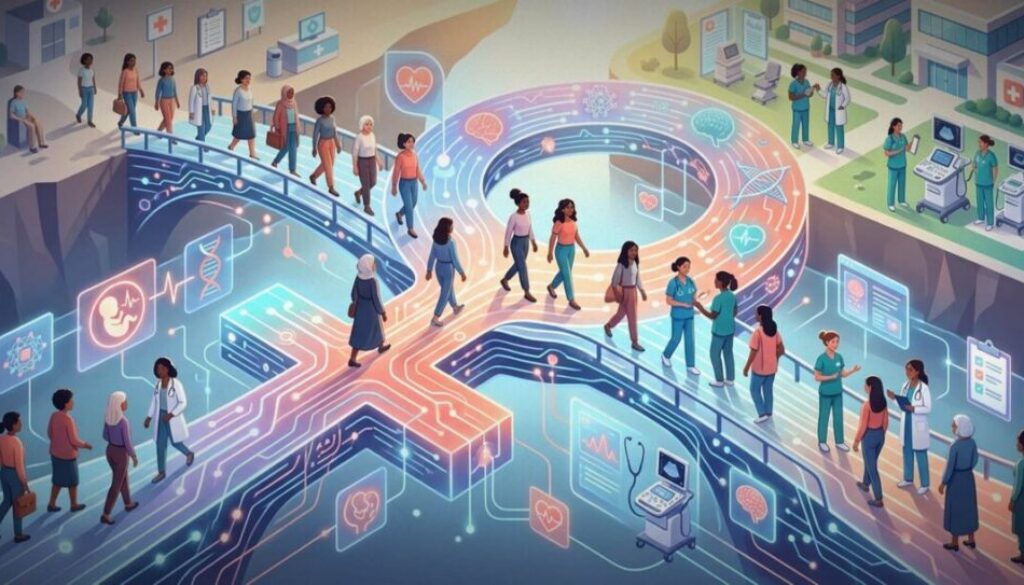
3 ways AI can help close the gap for women’s insurance coverage

Besides helping speed up the claims process and generally bringing the insurance practice into the 21st Century, artificial intelligence may also help address a longstanding industry issue: the gender gap in coverage.
According to LIMRA, women consistently have had less insurance coverage than men for the last 15 years. Multiple studies conducted over the years have pointed to the same conclusion, and so has life insurance application data from iPipeline, a financial services software solutions firm.
Katie Kahl, chief product officer at iPipeline, said it means hundreds of women are potentially at risk of not having the financial support they need if an unexpected event occurs.
“That’s what’s difficult about these types of sales; you must talk about things that are difficult to talk about. You must talk about what’s going to happen if something unexpected happens in your life, and are you prepared for that?” Kahl said.
She believes technology can help provide insights into where and why coverage gaps exist, and then further guide better education and awareness. Tech also provides insights on which products to market to women and how best to close the sale.
“Especially when women are thinking about protecting their family, you must be able to apply that emotional element. So use AI to personalize the offerings and come up with the right recommendations, but don’t lose that human touch in terms of how those are delivered,” she said.

What’s driving the gap?
Before looking at solutions, Kahl explored some possible reasons why the insurance coverage gap may exist for women in the first place.
In her view, education is the first misstep. A major challenge, she said, is “getting the right information on what is needed and the benefit of coverage” conveyed to audiences in a consumable way so they know what to purchase and why it’s valuable.
“And then women tend to be more conservative in terms of their financial planning. So they may not be as willing to invest in that financial future — and some of that might go hand in hand with the first piece we mentioned around education,” Kahl said.
But she also suggested the gender gap may have to do with how insurance has been traditionally marketed.
“Just historically, that hasn’t been the target market for many of the agents or advisors, because it may not have been the head of household. So, I think being able to target those demographics and match them with the right products and services is a key need,” she said.
iPipeline’s data also found a similar trend from an age perspective, where younger audiences also struggled in terms of education and awareness of the value of insurance coverage.
However, looking at the younger generation also revealed a technological disconnect that’s driving coverage gaps. According to Kahl, many younger Americans “don’t want an agent and an advisor — they want to be able to go to one individual and get the full coverage that they need.”
“They just have different expectations on how they purchase life insurance or financial products. They want more of a one-stop shop that they’re used to in other areas of their life, and they also expect more digital experiences,” Kahl said. “So depending on the age of the women that are targeted, that may also influence some of the trends or their purchasing behavior.”
Three ways AI can help
Kahl suggested AI can help bridge the insurance coverage gap for women in three key ways.
- Provide marketing insights
- Simplify and expand education
- Build tailored recommendations
“I think there are a few different ways, especially with the emergence of AI and data strategies. One is finding the individuals who need this protection. So the right data strategy can help bring together all the data points that are needed to be able to target where these gaps are, where are folks underinsured, so that we can identify where that coverage is needed,” Kahl said.
In her view, part of that is the education piece and helping people understand why a product is important to protect their family – especially if they are the primary caregiver – and how companies can personalize the right offering. Additionally, AI can play a role in helping to simplify long, complex policy documents that typically contain a lot of industry jargon and can be difficult for the average consumer to digest.
“AI is a really good way to be able to summarize those potential offerings so it’s easier for folks to understand, especially if you’ve never purchased a product like that before. And all those same things probably apply with that younger demographic we talked about as well,” Kahl said.
It can also help agents quickly personalize what may be important to each client, allowing them to produce tailored, “on-the-fly” recommendations.
“I think if we can approach these types of sales with a more personalized and consultative approach, then we can start to reduce the risk around women’s long-term financial security,” Kahl said.
© Entire contents copyright 2026 by InsuranceNewsNet.com Inc. All rights reserved. No part of this article may be reprinted without the expressed written consent from InsuranceNewsNet.com.
The post 3 ways AI can help close the gap for women’s insurance coverage appeared first on Insurance News | InsuranceNewsNet.