
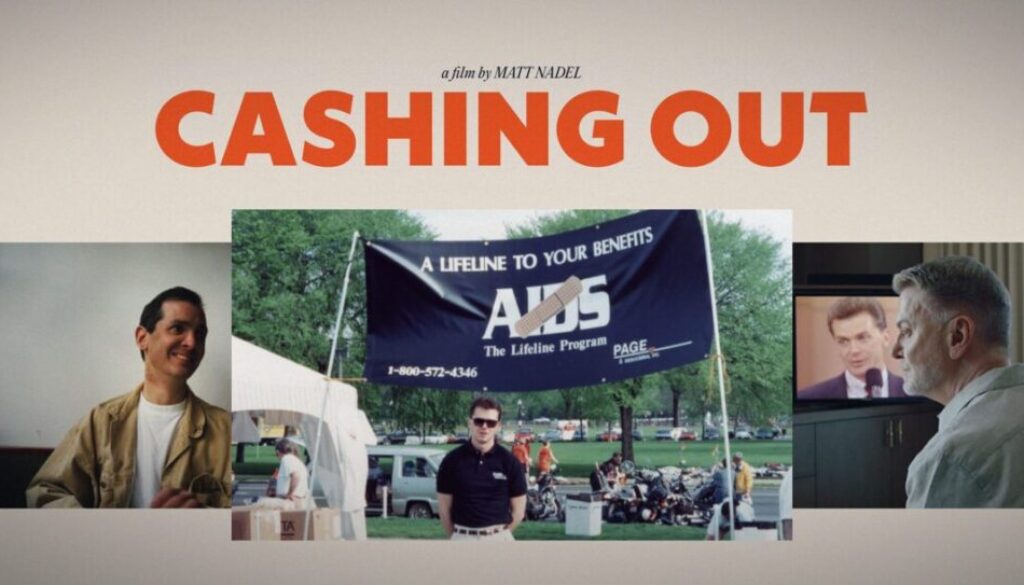
‘Cashing Out’: Film recounts how viatical settlements arose from AIDS crisis

Matt Nadel had to confront a lot of personal and ethical conflicts while making “Cashing Out,” a short film recounting the birth of the viatical settlement industry.
The 40-minute film – on the shortlist for an Academy Award nomination – tells the story of how victims coped with the new killer disease AIDS during the 1980s. The disease gave rise to viatical settlements, an investment strategy where terminally ill patients sold their life insurance policies to investors for immediate cash.
The film highlights the moral dilemma of an industry that profited from death. While it provided much-needed relief to the dying, investors often earned significant profits on a “quick turnaround” when patients passed away.
“We didn’t have the luxury to be on some arms-crossed moral high ground, saying, ‘Well, this is not morally correct,’ Because we were desperate,” Nadel said. “The government had left people to fend for themselves.”
Nadel finds out next week if the film will get a short film nomination for an Academy Award.
Three central participants
The central figure in “Cashing Out” is Scott Page, a gay man who helped broker the first viatical deals.

Nadel conducted extended interviews with two other participants: DeeDee Ngozi Chamblee, a transgender elder who founded LaGender, Inc., an advocacy group for trans women, and Sean Strub, a prominent activist and survivor who sold his life insurance policy for $400,000.
Strub used the funds to launch POZ Magazine in 1994, a publication for people living with HIV and AIDS.
Nadel began pursuing “Cashing Out” after a conversation with his father, Phil Nadel, in which he learned that Phil had been an investor in viatical policies during the 1980s. It led Matt Nadel to some ethical questions of his own.
“That he had bought the life insurance policies of several people who were dying of AIDS, and made a profit when they died, and that those profits had been part of what funded my childhood is especially eerie given that I’m now a gay man,” he said.
From the early days of the AIDS crisis, the viatical industry evolved to become part of the broader life settlement market for seniors. The practice faces scrutiny for high broker fees, fraud risks, and potential investor losses if the insured lives longer than expected.
At the time, it was more of an emergency solution, Nadel noted. Page came up with the idea to help his partner, Greg, who was dying of AIDS but had a life insurance policy. Greg belonged to an AIDS support group, and the viatical idea spread quickly.
‘We weren’t victims’
The gay community focused its criticisms on the overall societal response to the AIDS crisis, Matt Nadel explained, not the life insurance industry. And continues to.
“I heard a lot of people say, ‘We weren’t victims of this industry. We were victims of a culture and a political moment that was content with our deaths,’” Nadel said. “This was a way that we could band together and innovate and try and survive until medications came out.”
Things changed in the mid-1990s when AIDS treatment progressed from the first single drug, AZT, to combination therapies. AZT combined multiple antiretrovirals to suppress the virus, transforming HIV from a fatal illness into a manageable chronic condition.
For those viatical participants, it meant their investments went south. Many investors were pragmatic and empathetic, Nadel said, treating their investments as a market gamble that didn’t pan out.
“But there were other people who became, honestly, pretty vicious in that time, filing lawsuits because people had not died when brokers said they would die,” he said. “I’m sorry that they lost their money, but it is their fault for not having a diversified investment portfolio. You should never have put all of your retirement into this one thing.”
“Cashing Out” captures moments of joy from AIDS victims who used their viatical settlement funds to take a trip of a lifetime, or in one case, purchase a dream home in the Pocono Mountains of Pennsylvania.
But not everyone had a life insurance policy. Many victims died alone, penniless and receiving little quality treatment. Nadel wants viewers to come away from his film with questions about the American healthcare system and whether it is a fair and just system.
“Even [Phil Nadel] said, ‘My work in this industry made it clear to me that people should not have to sell their life insurance policies in order to live,’” Matt Nadel recalled. “As the richest country in the world, we can do better than that.”
© Entire contents copyright 2026 by InsuranceNewsNet.com Inc. All rights reserved. No part of this article may be reprinted without the expressed written consent from InsuranceNewsNet.com.
The post ‘Cashing Out’: Film recounts how viatical settlements arose from AIDS crisis appeared first on Insurance News | InsuranceNewsNet.