Changes, personalization impacting retirement plans for 2026
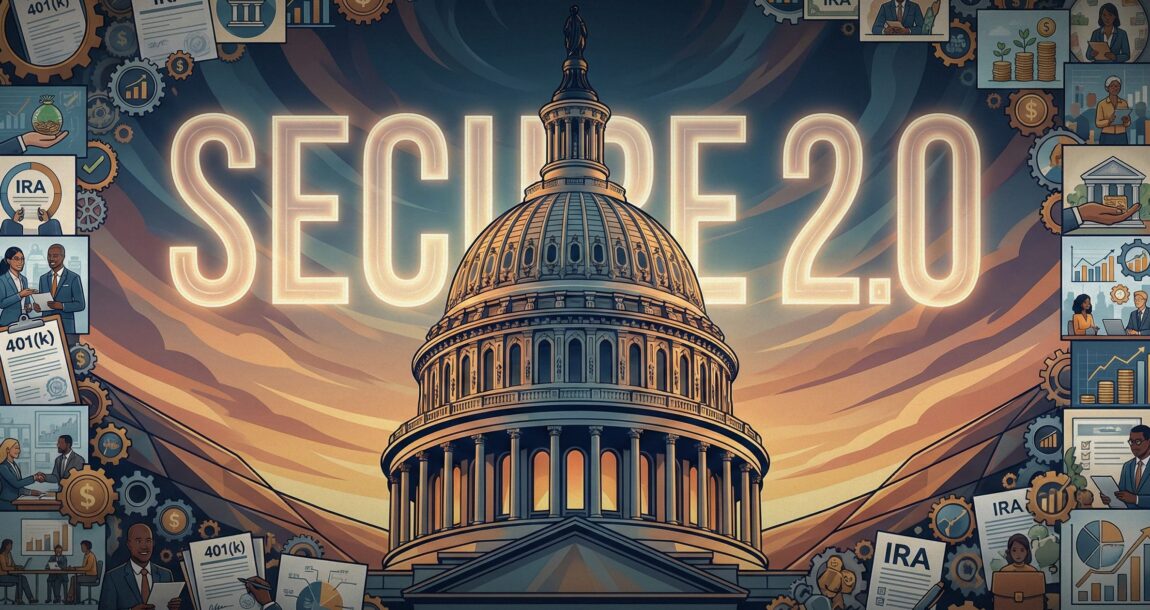
The SECURE Act and SECURE 2.0 were the biggest changes the retirement plan industry has seen in a long time. Many provisions of those two groundbreaking laws are in the early stage of implementation.
What advisors must know as they work with plan sponsors was the topic of a recent Vestwell webinar.
One result of SECURE and SECURE 2.0 was a significant increase in the number of SIMPLE IRAs converting to 401(k) plans in the middle of the year, said Stephanie Smith, Vestwell vice president of plan design and documents. Before the new laws, SIMPLE IRA plans could not be converted until the beginning of the year.
Smith noted that in doing the conversion, the SIMPLE IRA must be replaced with a safe harbor plan.
“You can’t just start a traditional 401(k); you have to go with mandatory contributions here,” she said. “It’s also important to note that as part of the safe harbor requirement, you can use a QACA [qualified automatic contribution arrangement]. So you can put that vesting schedule on those employer contributions when they make that transition.”
The difference between SIMPLE IRA and a 401(k) with a QACA, Smith said, is that in the SIMPLE plan, everyone is fully vested in those employer contributions. “You make a contribution and if you leave the company, that money is yours.”

With a 401(k) plan with a QACA, a two-year vesting schedule can be added to the employer contribution. There are required contributions, but the employee must remain with the employer for two years before they can receive the funds.
Another significant change to employer-based retirement plans is automatic enrollment requirements. Plans that started after Dec. 29, 2022, were required to implement an automatic enrollment feature as of Jan. 1, 2025. Employers with fewer than 10 employees and companies in business for less than three years are exempt from that requirement, Smith said, but that still leaves a major percentage of plans required to have an automatic enrollment feature of at least 3% with escalation up to 10%.
Where advisors come in for retirement plan clients
This is where advisors are most likely to hear from their clients’ employees, said Kevin Gaston, Vestwell head of strategic retirement consulting.
“If you’re an advisor and you helped start a plan after SECURE 2.0 passed, now here we are with the first escalator. That means after Jan. 1, 2026, everyone who was at 5% went to 6%. It’s important to let the sponsor know they’re probably going to hear a few things because your employees see a smaller paycheck and they don’t look at all the notices sent to them and all the warnings. They just think, someone took my money, which is not necessarily accurate but that’s how they’ll read it.”
Gaston said it’s important to let employees know that the plan contributions are on auto-escalate unless they choose otherwise.
Changes in the rules regarding Roth catch-up contributions also will impact advisors, Gaston said. Beginning January 1, 2026, the SECURE 2.0 mandates that catch-up contributions for 401(k), 403(b), and 457(b) plans must be made on a Roth (after-tax) basis for participants age 50 or older who earned over $150,000 in FICA wages from their employer in the prior year. The 2026 catch-up limit is $8,000 for ages 50–59 and 64 and older, while a special “super catch-up” of $11,250 applies to those ages 60–63.
“If you’re an advisor, this is an opportunity to talk about tax diversification,” he said. “Say, ‘There’s another place to put some tax-deferred money, and that’s a cash balance plan.”
‘Stress’ is the operative word for 2026
Employers and employees are experiencing stress over retirement, said Mike Dullaghan, director of retirement sales execution for Franklin Templeton.
“We’re seeing an interesting intersection of plan sponsors being stressed about the burden of recruiting, training and retaining intersecting with a difficult budgetary environment for benefits,” he said. “They’re trying to do all they can to hang on to their workforce, but at the same time, they’re stretched thin from a benefit budget standpoint.
Employees are stressed from high prices and concern over their ability to retire.
“But the good news is the two groups seem to be more committed than ever in terms of working together to try to better their retirement readiness,” he said. “Both groups seem to be forming more of an attitude that we’re in this together.”
Dullaghan described 2026 as “a transitional year for the retirement plan industry.”
He said the number of plans has doubled in the past five years, and the number of savers enrolled in plans increased by 50% during that time. “We expect to see $7 trillion of new assets contributed by those new plans, which leads to all kinds of new capital formation across the country,” he said.
One trend that Franklin Templeton picked up on in its annual survey of American workers is the need for personalization in retirement plans.
“I call it the Uber, Amazon and Netflix effect,” Dullaghan said. “Think about how much those apps know about us.”
He called for advisors to check in with plan sponsors to learn how much their employees want personalization in their retirement plan choices.
“At least half of companies today offer two dozen benefits when you add in all the voluntary benefits. Some really cool stuff has come online over the years,” Dullaghan said.
“That thirst for personalization is on all sides, including the retirement side.”
© Entire contents copyright 2026 by InsuranceNewsNet.com Inc. All rights reserved. No part of this article may be reprinted without the expressed written consent from InsuranceNewsNet.com.
The post Changes, personalization impacting retirement plans for 2026 appeared first on Insurance News | InsuranceNewsNet.